

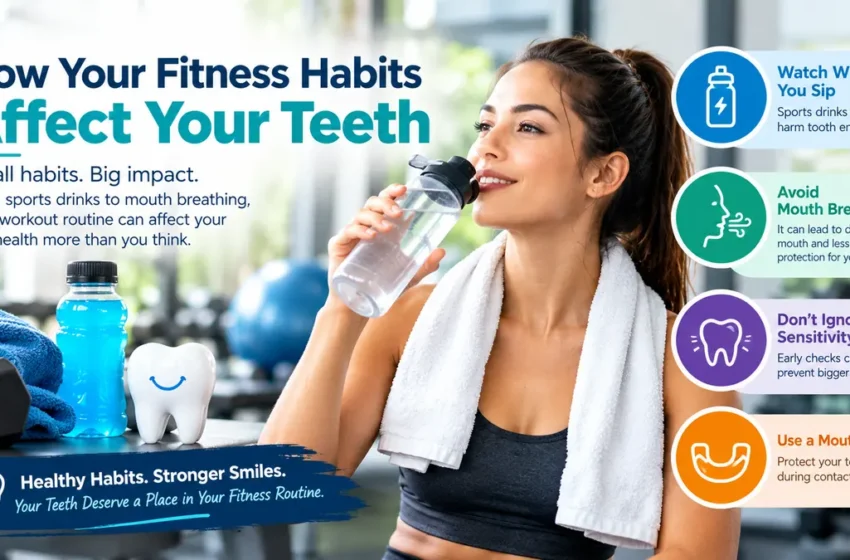
When you’re serious about fitness, you probably pay close attention to what you eat, how much sleep you get, and whether you recover properly between workouts.
But how often do you think about your teeth?
Oral health isn’t usually the first thing that comes to mind when planning a training routine. Yet everyday exercise habits, from sipping sports drinks to breathing through your mouth, can unexpectedly affect your teeth and gums.
Here are four oral health habits that athletes and regular gym-goers often overlook.
- Sipping Sports Drinks Throughout a Workout
Sports drinks are popular among athletes, particularly during longer or more demanding training sessions.
While some can help replace fluids and electrolytes lost through sweating, many also contain sugar or acids that can affect tooth enamel.
The problem isn’t necessarily having one occasionally. It’s repeatedly sipping acidic or sugary drinks over an extended period, which increases how long your teeth are exposed.
For shorter workouts, water is often sufficient. If you do need a sports drink, drink water afterward rather than letting the residue stay in your mouth.
- Forgetting That Mouth Breathing Can Cause Dry Mouth
Think about how you breathe during an intense run or a difficult set at the gym.
When exercise becomes demanding, many people naturally start breathing through their mouths.
Although this is perfectly normal, frequent mouth breathing can contribute to dryness, particularly if you’re already dehydrated.
Saliva plays an important role in protecting teeth by washing away food particles and helping neutralize acids.
When your mouth dries out, that natural protection decreases.
Staying hydrated during exercise and noticing persistent dry mouth can help protect your oral health.
- Ignoring Tooth Sensitivity Until It Becomes Painful
Athletes often push through physical discomfort, but that attitude shouldn’t extend to dental problems.
Sensitivity when drinking cold water, discomfort when chewing, or occasional bleeding gums can be easy to dismiss when you’re focused on training.
However, these symptoms may indicate an issue that needs attention.
Regular dental examinations can help identify problems before they become more complicated.
For those looking to maintain their oral health alongside an active lifestyle, dentists in Balham can provide professional advice on dental care, preventive treatments, and any symptoms that may need investigating.
- Not Protecting Teeth During Contact Sports
Most athletes wouldn’t dream of playing football without suitable boots or cycling without a helmet.
Yet dental protection is sometimes overlooked.
Sports such as rugby, hockey, boxing and martial arts can involve accidental impacts to the face, increasing the risk of chipped, broken or knocked-out teeth.
A properly fitted mouthguard can help reduce the likelihood and severity of certain dental injuries.
Custom-made mouthguards provided by dental professionals may offer a more secure fit than some generic alternatives.
If your sport involves physical contact or a risk of facial injury, dental protection deserves a place alongside the rest of your equipment.
Your Teeth Deserve a Place in Your Fitness Routine
Taking care of your oral health doesn’t require a complicated new routine.
Often, it’s about small habit changes, whether that’s drinking more water, paying attention to dental symptoms, or choosing the right protection for your sport.
Athletes spend considerable time looking after their bodies, and their teeth shouldn’t be an afterthought.
After all, good oral health is part of long-term wellbeing, both during training and away from it.