

Table of Contents
Introduction
Healthy living isn’t about perfection; it’s about making sustainable choices that enhance your physical, mental, and emotional well-being. In a world filled with fad diets and conflicting advice, this guide aims to simplify the core principles of wellness. Whether you are just starting your journey or looking to refine your habits, understanding the fundamentals of nutrition, movement, and mindset is the key to long-term vitality.
Healthy Living
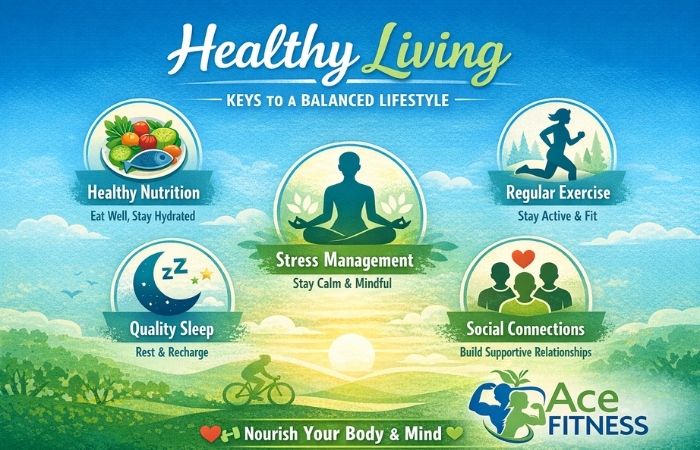
Healthy living is a lifelong approach to health that goes beyond simply being “not sick.” It involves actively making choices that support your body’s functions and your mind’s resilience. This includes proper nutrition, regular physical activity, adequate sleep, stress management, and fostering positive social connections. It is a dynamic process of growth and adaptation.
How to Maintain a Healthy Living
| Area | Action | Frequency |
|---|---|---|
| Hydration | Drink water consistently throughout the day. | 8–10 glasses daily |
| Sleep | Maintain a consistent sleep-wake cycle. | 7–9 hours per night |
| Nutrition | Prioritize whole foods over processed items. | Every meal |
| Medical Care | Schedule annual check-ups and screenings. | Annually (or as recommended) |
| Mental Health | Practice mindfulness or digital detox. | Daily / Weekly |
Tips for Health Living
| Category | Tip | Why It Helps |
|---|---|---|
| Diet | Eat the rainbow. | Different colored fruits/veg provide diverse phytonutrients. |
| Exercise | Find a workout you enjoy. | Consistency is easier when you don’t dread the activity. |
| Mental | Set boundaries. | Reduces burnout and protects emotional energy. |
| Social | Cultivate a supportive circle. | Positive relationships increase longevity and happiness. |
| Habits | Start small (e.g., 10-minute walks). | Prevents overwhelm and builds momentum. |
Everyday Actions for Better Health
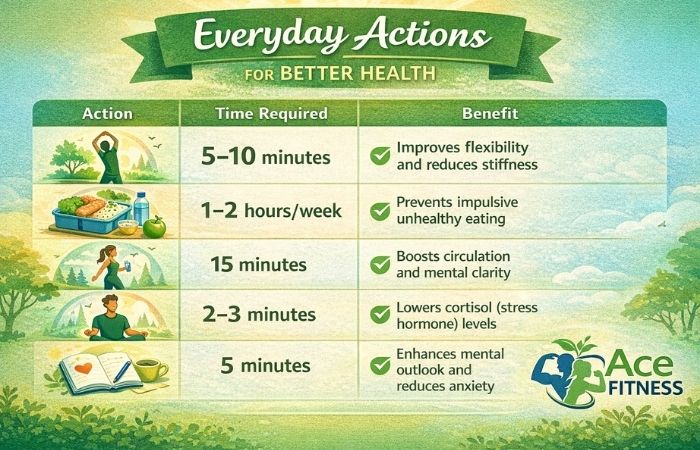
| Action | Time Required | Benefit |
|---|---|---|
| Stretching | 5–10 minutes | Improves flexibility and reduces stiffness. |
| Meal Prepping | 1–2 hours/week | Prevents impulsive unhealthy eating. |
| Walking Breaks | 15 minutes | Boosts circulation and mental clarity. |
| Deep Breathing | 2–3 minutes | Lowers cortisol (stress hormone) levels. |
| Gratitude Journaling | 5 minutes | Enhances mental outlook and reduces anxiety. |
Healthy Living: Diet & Exercise Tips, and Things to Avoid
| Focus | Do This | Avoid This |
|---|---|---|
| Diet | Focus on fiber, lean protein, and healthy fats. | Refined sugars, trans fats, and ultra-processed foods. |
| Exercise | Combine cardio, strength training, and mobility. | Sitting for extended periods without movement. |
| Hydration | Drink water and herbal teas. | Sugary sodas and excessive fruit juice. |
| Mindset | Practice self-compassion and consistency. | “All-or-nothing” thinking (e.g., quitting after one slip-up). |
| Eating Habits | Eat mindfully and chew slowly. | Eating while distracted (scrolling on phone). |
Healthy Living Products
| Product Category | Recommended Items | Purpose |
|---|---|---|
| Kitchen | Air fryer, glass meal-prep containers | Encourages home cooking and reduces oil usage. |
| Fitness | Yoga mat, resistance bands, walking pad | Low-barrier tools for daily movement. |
| Sleep | Blackout curtains, white noise machine | Improves sleep hygiene and circadian rhythm. |
| Hydration | Insulated water bottle (with time markers) | Tracks intake and keeps water cold. |
| Wellness Tech | Fitness tracker, smart scale | Monitors activity levels and trends. |
Healthy Living Exercise
| Type of Exercise | Examples | Frequency | Primary Benefit |
|---|---|---|---|
| Cardiovascular | Brisk walking, cycling, swimming | 3–5 times/week | Heart health, endurance, calorie burn. |
| Strength | Squats, push-ups, weight lifting | 2–3 times/week | Muscle maintenance, bone density, metabolism. |
| Flexibility | Yoga, dynamic stretching | Daily | Injury prevention, range of motion. |
| NEAT | Taking stairs, gardening, housework | Daily | Non-exercise activity that boosts total daily energy expenditure. |
Healthy Living Websites
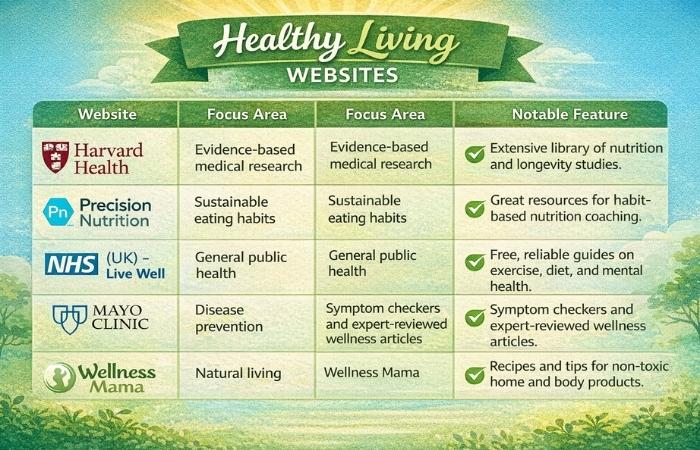
| Website | Focus Area | Notable Feature |
|---|---|---|
| Harvard Health | Evidence-based medical research | Extensive library of nutrition and longevity studies. |
| Precision Nutrition | Sustainable eating habits | Great resources for habit-based nutrition coaching. |
| NHS (UK) – Live Well | General public health | Free, reliable guides on exercise, diet, and mental health. |
| Mayo Clinic | Disease prevention | Symptom checkers and expert-reviewed wellness articles. |
| Wellness Mama | Natural living | Recipes and tips for non-toxic home and body products. |
Healthy Living vs Healthy Lifestyle
| Aspect | Healthy Living | Healthy Lifestyle |
|---|---|---|
| Definition | The active practice of health habits. | The overall pattern of daily living that reflects values. |
| Scope | Focuses on specific actions (diet, exercise, sleep). | Encompasses work-life balance, hobbies, and social roles. |
| Flexibility | Can be rigid if viewed as a checklist. | More holistic and adaptable to life changes. |
| Goal | To optimize bodily functions and prevent disease. | To achieve sustained well-being and fulfillment. |
| Example | Going for a run because you planned it. | Choosing a walkable neighborhood to naturally stay active. |
Conclusion
Achieving healthy living is not about drastic restrictions or short-term challenges. It is about building a sustainable framework that supports your body and mind through every stage of life. By focusing on consistent hydration, balanced nutrition, regular movement, quality sleep, and mental resilience, you create a foundation that allows you to thrive. Remember, progress matters more than perfection—small, daily actions compound into significant long-term results.
FAQs
1. What is the most important part of healthy living?
Consistency. It is better to walk for 15 minutes every day than to run for two hours once a month and then quit. Sustainable habits yield the best long-term results.
2. Do I need to cut out all carbs or sugar to be healthy?
No. Healthy living is about balance. Focus on reducing added sugars and choosing complex carbohydrates (like oats, quinoa, and vegetables) over refined carbs. Total deprivation often leads to binging.
3. How do I start living healthier if I feel overwhelmed?
Start with one habit. Pick one area—such as drinking enough water or walking for 10 minutes after dinner—and master that for two weeks. Once it becomes automatic, add another habit.
4. Can I be healthy without going to the gym?
Absolutely. Physical activity counts regardless of location. Gardening, dancing, bodyweight exercises at home, and brisk walking are all valid forms of exercise.
5. How does sleep affect healthy living?
Sleep is foundational. Poor sleep increases hunger hormones (ghrelin), decreases willpower, impairs muscle recovery, and raises the risk of chronic diseases like diabetes and heart disease. You cannot “out-diet” or “out-exercise” bad sleep.
6. Is a healthy lifestyle expensive?
Not necessarily. While some organic products and gym memberships can be costly, the basics—water, seasonal vegetables, walking outdoors, and home-cooked beans and rice—are very affordable.