


Getting good marks in exams is one of the primary goals for students in schools, colleges, and competitive examinations. Good exam scores not only reflect a student’s understanding of a subject but also open opportunities for scholarships, career options, and academic advancement.
However, many students struggle with time management, study techniques, and exam pressure. Learning effective strategies to get good marks in exams can significantly improve performance without increasing stress.
This guide explains the best study techniques, preparation strategies, time management methods, and exam-day tips that help students consistently score higher marks.
Table of Contents
What Does “Getting Good Marks in Exams” Mean?
| Aspect | Explanation |
|---|---|
| Academic Performance | Achieving high scores in tests and examinations |
| Knowledge Understanding | Demonstrating clear understanding of concepts |
| Study Efficiency | Using smart study techniques rather than studying longer |
| Time Management | Completing syllabus and revision before exams |
| Exam Strategy | Answering questions effectively during exams |
Importance of Getting Good Marks in Exams
| Benefit | Description |
|---|---|
| Academic Opportunities | Higher marks improve chances for college admission |
| Scholarships | Many scholarships depend on academic scores |
| Career Options | Good academic records help in competitive exams |
| Confidence | High marks increase student confidence |
| Skill Development | Improves discipline and learning ability |
Student Performance Improvement with Structured Study Plan
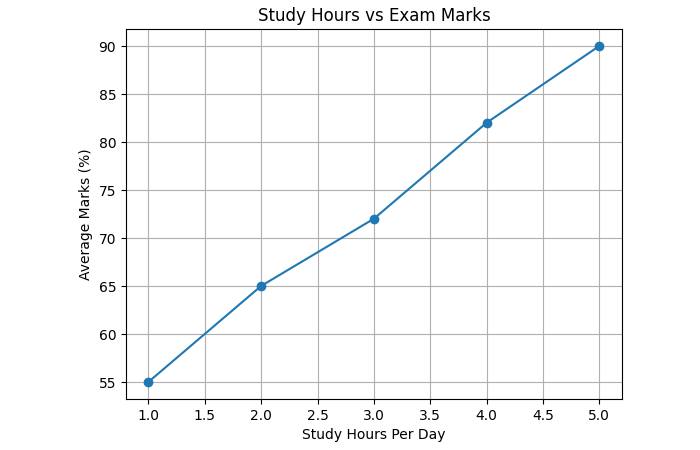
This graph should show how consistent study habits improve exam scores.
Best Study Techniques to Get Good Marks
| Study Technique | Description | Effectiveness |
|---|---|---|
| Active Learning | Writing notes and summarizing topics | High |
| Practice Tests | Solving previous exam papers | Very High |
| Mind Mapping | Visualizing concepts | High |
| Spaced Repetition | Revising topics at intervals | Very High |
| Group Study | Discussing topics with classmates | Moderate |
Time Management for Exam Preparation
| Time Activity | Recommended Time | Purpose |
|---|---|---|
| Learning new topics | 40% | Cover syllabus |
| Practice questions | 30% | Strengthen understanding |
| Revision | 20% | Retain information |
| Breaks | 10% | Prevent mental fatigue |
Daily Study Plan for Students

| Time | Activity |
|---|---|
| Morning | Review previous topics |
| Afternoon | Study new chapters |
| Evening | Solve practice questions |
| Night | Quick revision |
Subjects Study Strategy
| Subject | Best Method |
|---|---|
| Mathematics | Practice problems daily |
| Science | Understand concepts and diagrams |
| Languages | Reading and writing practice |
| Social Studies | Mind maps and summaries |
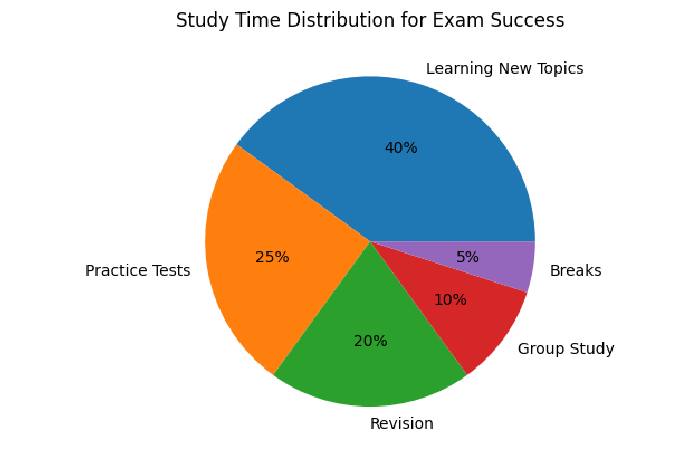
Study Time Distribution for Exam Success
Common Mistakes Students Make During Exams
| Mistake | Impact |
|---|---|
| Last-minute cramming | Poor memory retention |
| Lack of revision | Forgetting concepts |
| Poor time management | Incomplete answers |
| Ignoring practice papers | Difficulty in exam pattern |
| Exam anxiety | Reduced performance |
Smart Exam Writing Strategies
| Strategy | Explanation |
|---|---|
| Read questions carefully | Understand what is asked |
| Start with easy questions | Builds confidence |
| Manage time | Divide time per question |
| Use diagrams | Improves presentation |
| Review answers | Correct mistakes |
Study Habits That Improve Exam Scores
-
Study consistently rather than cramming
-
Take short breaks during study sessions
-
Use visual learning tools like diagrams
-
Practice past exam papers
Healthy Lifestyle for Better Performance
-
Sleep at least 7–8 hours daily
-
Eat healthy brain-boosting foods
-
Stay hydrated
-
Exercise regularly
Exam Day Tips
-
Arrive early to avoid stress
-
Read instructions carefully
-
Manage time during the exam
-
Stay calm and confident
Smart Study vs Hard Study
| Factor | Smart Study | Hard Study |
|---|---|---|
| Study Time | Efficient | Long hours |
| Techniques | Active learning | Passive reading |
| Results | Higher marks | Average marks |
| Stress Level | Lower | Higher |
Best Study Resources for Students
| Resource | Purpose |
|---|---|
| Textbooks | Core syllabus learning |
| Online courses | Additional explanations |
| Practice books | Exam preparation |
| Educational videos | Visual learning |
For learning study strategies and educational research, students can explore resources from UNESCO which promotes global education and student learning improvement.
FAQs
How can I get good marks in exams quickly?
Students can improve marks quickly by focusing on important topics, practicing previous papers, and revising regularly before exams.
How many hours should I study to get good marks?
Most successful students study between three to five focused hours daily along with regular revision.
Is practicing previous exam papers helpful?
Yes, solving past papers helps students understand exam patterns, important questions, and time management.
Does sleep affect exam performance?
Yes, proper sleep improves memory, concentration, and overall exam performance.
Can smart study improve marks?
Smart study techniques such as active learning, spaced repetition, and practice testing can significantly improve exam results.
Conclusion
Getting good marks in exams requires a combination of effective study techniques, proper time management, and consistent practice. Students who focus on understanding concepts rather than memorizing information tend to perform better in examinations. By following a structured study plan, practicing previous exam papers, and maintaining a healthy lifestyle, students can significantly improve their academic performance. Success in exams is not only about studying harder but also about studying smarter, staying disciplined, and maintaining confidence throughout the preparation process.